Panther Bar
Can You Keep a SecretThe Panther Bar occupies two very different settings: it is a product whose performance is scrutinized at Panther Corporation, and a treat that Emma Corrigan regularly brings home for her Grandpa. That contrast gives the bar significance beyond its uncertain place in the company’s portfolio. In the office, it is measured through research and discussed as a possible failure; in Emma’s family life, it is a dependable pleasure and a small expression of care.
Identity and Uses
At Panther Corporation, the Panther Bar is treated as a product whose performance is falling short of expectations. Paul calls for more lateral thinking about the problem and asks Connor Martin for the latest research statistics. Connor reports that a survey of 1,000 teenagers, questioned about aspects of the bar, has produced inconclusive results. The scale of the survey gives the discussion a numerical basis, but its outcome offers no clear answer about how the product should be judged or what might improve its performance.
The bar also has a straightforward use outside the meeting room: it is something people enjoy eating. Emma knows her Grandpa is especially fond of it, and that the fondness extends to his friends at the bowling club. The same product that appears in a corporate discussion as an underperforming item is, in this other setting, a familiar source of pleasure shared by a group of older consumers.
A Recurring Gift
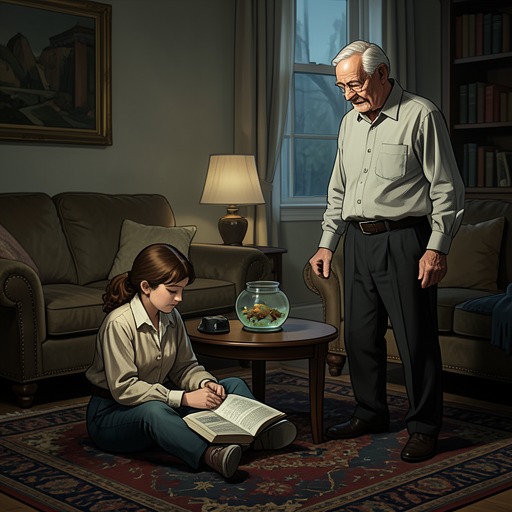
Emma brings Panther Bars whenever she visits home. She uses her allowance to buy her Grandpa a boxful for each visit, making the gift a repeated practice rather than a one-time gesture. The detail establishes that the bars are not an incidental present: their place in this relationship is regular enough for Emma to plan for them and set aside her own money.
The exchange also makes the product part of a moment of affection. Emma greets her Grandpa, kisses him, and receives a tight squeeze of her hand before pointing out the box of bars. He thanks her warmly and calls her a good girl. The bar does not create their closeness, but it gives Emma a tangible way to express attention to what he likes. His enthusiasm, and that of his bowling-club friends, supplies a vivid counterpoint to the distant language of product performance at work.
Corporate Review and Uncertain Evidence
In the meeting, the Panther Bar’s standing is unsettled. Paul says it is not performing as it should and urges the group to think laterally. Connor’s figures seem to promise an evidence-based direction, yet the survey of 1,000 teenagers is inconclusive. When Paul asks for ideas, the discussion turns toward possible explanations and further research rather than a firm diagnosis. The available data has reached a sizeable group, but it has not resolved what the company should do.
That uncertainty matters because the conversation quickly moves from assessment to the product’s continued existence. Artemis Harrison argues that if the Panther Bar is not performing, it should be axed, describing it as a problem child. The proposal makes the meeting more than an abstract exercise in marketing language: a product that has failed to satisfy corporate expectations may be removed. Against that possibility, Emma thinks of her Grandpa and wonders what he will take to his bowling tournaments if the bar is dropped.
Emma’s Intervention and the Bar’s Significance
Emma has been gathering the courage to speak before offering her example. She tells the meeting that her Grandpa really likes Panther Bars and suggests that she might ask him what he thinks. Her contribution is personal and modest; it does not claim to overturn the survey or establish that the bar is commercially successful. Instead, it introduces a consumer whom the teenagers’ survey does not represent and a form of knowledge grounded in her repeated experience of buying the product.
The response exposes a gap between the meeting’s corporate criteria and Emma’s everyday evidence. Paul questions the relevance of her suggestion, and Connor’s earlier emphasis on professional conduct has already left Emma feeling hurt. When Artemis proposes axing the bar, Emma’s concern returns in a concrete form: its removal would mean losing something her Grandpa enjoys at his bowling tournaments. The Panther Bar therefore links two kinds of judgment without settling the conflict between them. The company has inconclusive research and doubts about performance; Emma has a particular, recurring example of loyalty to the product. Its importance lies in that contrast: a bar considered expendable in a corporate discussion is, in Emma’s home life, part of a thoughtful gift and a familiar pleasure shared beyond the immediate family.